

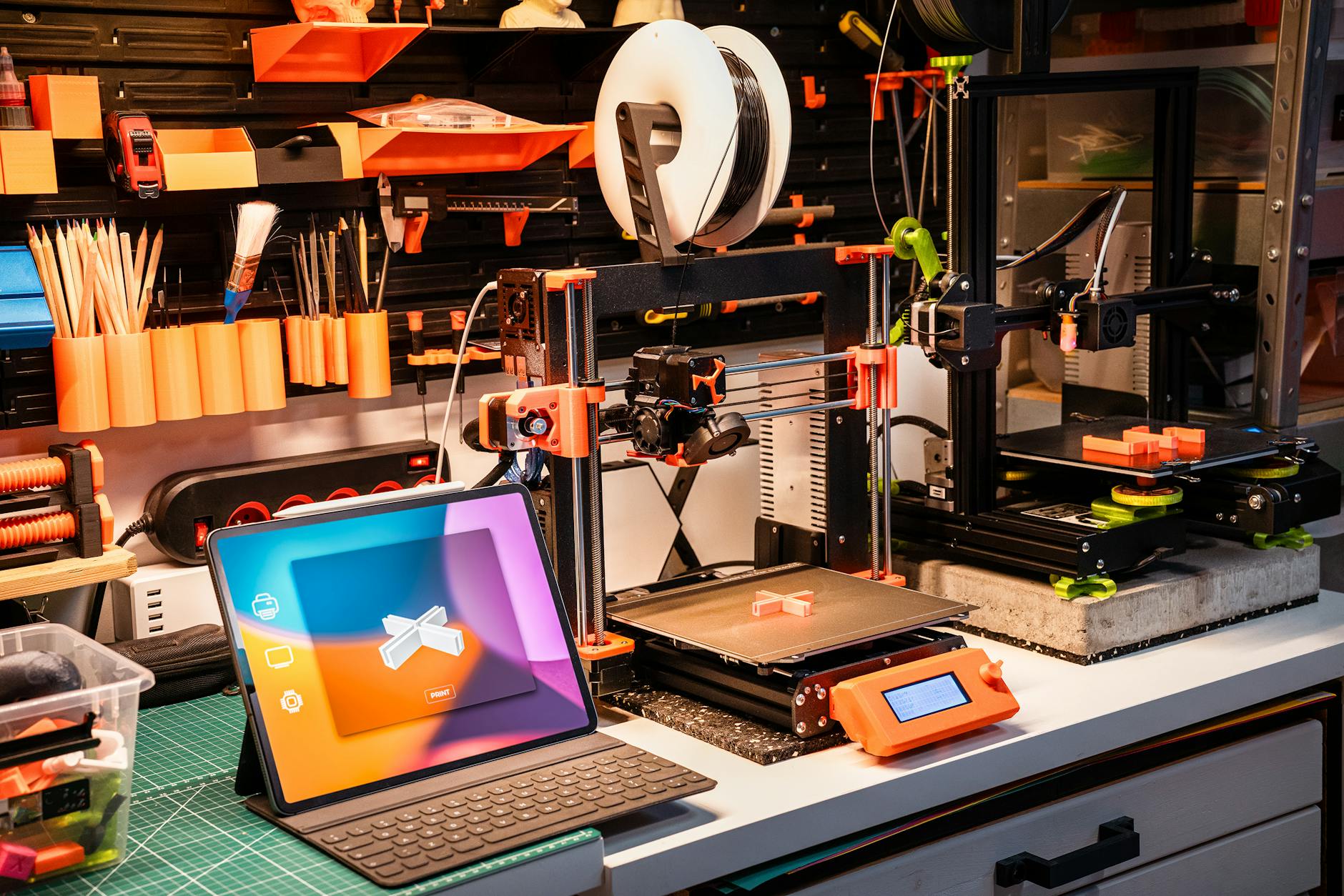
The construction industry is undergoing a seismic shift, driven by technologies that promise to redefine how we design, build, and sustain our world. At the forefront of this revolution is 3D printing, a method once confined to prototyping and small-scale manufacturing. Today, it’s breaking ground—literally—in construction, offering unprecedented efficiency, sustainability, and creativity. For forward-thinking firms like Terreworks, this technology isn’t just a novelty; it’s the foundation of tomorrow’s built environment.
The Rise of 3D Printing in Construction
3D printing, or additive manufacturing, involves creating three-dimensional structures by depositing materials layer by layer, guided by digital blueprints. In construction, this translates to robotic arms or gantry systems extruding concrete, polymers, or composite materials to form walls, foundations, and even entire buildings. Unlike traditional methods, which rely on manual labor and rigid molds, 3D printing enables:
- Precision: Digital designs eliminate human error.
- Speed: Structures can be printed in days instead of months.
- Sustainability: Reduced waste through exact material usage.
- Design Freedom: Complex geometries (e.g., curves, lattices) become feasible.
For companies like Terreworks, which specialize in merging innovation with practicality, 3D printing aligns perfectly with our mission to deliver smarter, greener, and cost-effective solutions for urban and rural development.
Key Advantages Reshaping the Industry
1. Cost Efficiency
Labor shortages and rising material costs plague traditional construction. 3D printing slashes expenses by automating up to 80% of the building process. For example, a 2023 study by the National Association of Home Builders found that 3D-printed homes cost 30–50% less than conventional builds. By minimizing human labor and material waste, Terreworks helps clients reinvest savings into higher-quality finishes or scalable projects.
2. Sustainability at Scale
Concrete production accounts for 8% of global CO₂ emissions. 3D printing reduces this footprint by optimizing material use and incorporating eco-friendly alternatives like geopolymers or recycled aggregates. Terreworks prioritizes sustainable practices, partnering with suppliers of low-carbon concrete to ensure projects meet LEED certification standards.
3. Disaster-Resilient Structures
From hurricane-prone coastal regions to earthquake zones, 3D-printed buildings can be engineered for resilience. The technology allows for reinforced internal geometries that withstand extreme forces. In 2022, Terreworks collaborated with a nonprofit to deploy 3D-printed emergency housing in Puerto Rico, showcasing how innovation can address humanitarian crises.
Real-World Applications: From Homes to High-Rises
3D printing is no longer experimental—it’s operational. Global pioneers and Terreworks’ partners are proving its viability:
- Affordable Housing: ICON, a U.S.-based firm, has printed over 100 homes in Texas and Mexico, targeting homelessness and affordability.
- Commercial Spaces: Dubai’s “Office of the Future” became the world’s first 3D-printed office in 2016, completed in 17 days at half the standard cost.
- Infrastructure: The Netherlands’ 3D-printed concrete bridge in Gemert demonstrates durability, supporting cyclists since 2017.
Terreworks is leveraging these breakthroughs to help developers and municipalities adopt 3D printing for customizable residential communities, modular schools, and rapid infrastructure repairs.
Challenges and How Terreworks Addresses Them
While promising, 3D printing in construction faces hurdles:
- Regulatory Gaps: Building codes lag behind technological advances.
- Material Limitations: Not all concrete mixes are print-ready.
- Scalability: Large projects require massive printers and power.
At Terreworks, we turn challenges into opportunities. Our team works with policymakers to shape modern regulations and conducts R&D on hybrid materials (e.g., fiber-reinforced concrete). For scalability, we deploy modular printers that assemble segments on-site, reducing logistical barriers.
The Future of Construction Starts Here
The global 3D printing construction market is projected to grow at a CAGR of 245% by 2030 (Grand View Research). As the technology evolves, expect advancements like:
- Multi-material Printing: Combining insulation, electrical wiring, and plumbing within layers.
- On-Site Robotics: Autonomous printers working alongside human crews.
- Lunar Construction: NASA and ESA are testing 3D printing for moon bases using regolith.
Terreworks is committed to staying ahead of these trends. Through partnerships with tech innovators and academic institutions, we’re pioneering methods to integrate AI-driven design tools and circular economy principles into 3D printing workflows.
Build Smarter with Terreworks
The future of construction is being printed—one layer at a time. Whether you’re a developer exploring cost-effective housing solutions, a city planner aiming for carbon neutrality, or an architect pushing design boundaries, Terreworks offers the expertise to turn visionary projects into reality.
Let’s innovate together.
📩 Reach out today: reach@terreworks.com
📞 Call us: (206) 494-3345
🌐 Explore our services: https://terreworks.com



Leave a Reply